Old Gods Rise is a telling of Boudica’s rebellion through the eyes of her druid daughter – Boudica being probably the best-known person from almost 500 years of Roman Britain.
In either 60 or 61AD, Boudica led a rebellion of her people the Iceni against Rome, prompted by greedy and brutal treatment by the Roman authorities. The rebels destroyed the Roman cities that are now Colchester, London, and the town I grew up in – St Albans. Most of southern Britain joined in the rebellion, which was ultimately defeated by the Roman army.
So it is that Boudica thunders into history (perhaps riding a chariot) and out again at the end of a paragraph. We know even less about her daughters, who appear only in two sentences written by the Roman historian Tacitus. They inherit a kingdom, are raped by Romans, and then vanish.
So who were the Iceni? How did they live? How did they come to be oppressed by Rome? Why did they rebel? Who were Boudica and her daughters? As a writer of historical fiction I have to fill in many gaps, but for those interested in the pure history, read on!
The Iceni before Rome
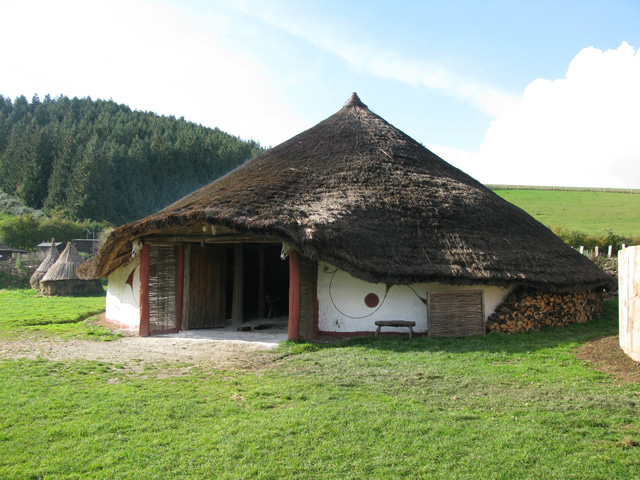
The Iceni lived in what is now Norfolk and probably much of Suffolk. No-one knows exactly when they settled there – it’s possible that British tribes moved around a fair bit. Julius Caesar may have mentioned them in his history of his campaigns in Britain in 55BC, though it’s not clear. Probably that land had been Iceni well beyond living memory at Boudica’s time.
The Iceni spoke a language which was never written down, now called ‘Common Brythonic’. Most ancient Britons spoke a very similar language, and over time in Wales that language developed into what is now Welsh. Across the English Channel, the Gauls spoke something relatively similar to British.
Today we’d call the Iceni ‘Celts’, that is to say members of a very loose cultural and linguistic group that stretched from Ireland to what is now Spain and central Turkey. This term wouldn’t have meant anything to the Iceni. Their horizons were likely very narrow, confined to the nearby tribes of southern Britain and their cousins across the Channel, without knowing or caring about anyone further away.
The Iceni were an ‘Iron Age’ culture. They had iron weapons and armour, gold and silver jewels, simple ploughs pulled by oxen. They rode horses (or at least the nobles did), drove chariots, and used carts to haul goods. Their chariots and their carts might have been similar in design.
We don’t know a great deal about Iceni politics or society. The closest culture to create its own written records was Ireland, but those texts date from at least eight centuries later and written down by Christian monks. There are glimpses of British and Gaulish habits from Roman authors, though usually with Roman assumptions applied.
Very likely, Iceni society was structured, traditional and hierarchical. This was no egalitarian proto-democracy. Roman writers remarked on the willingness of Gauls and Britons to pay taxes to their kings, and later to them.
Coming of the Romans
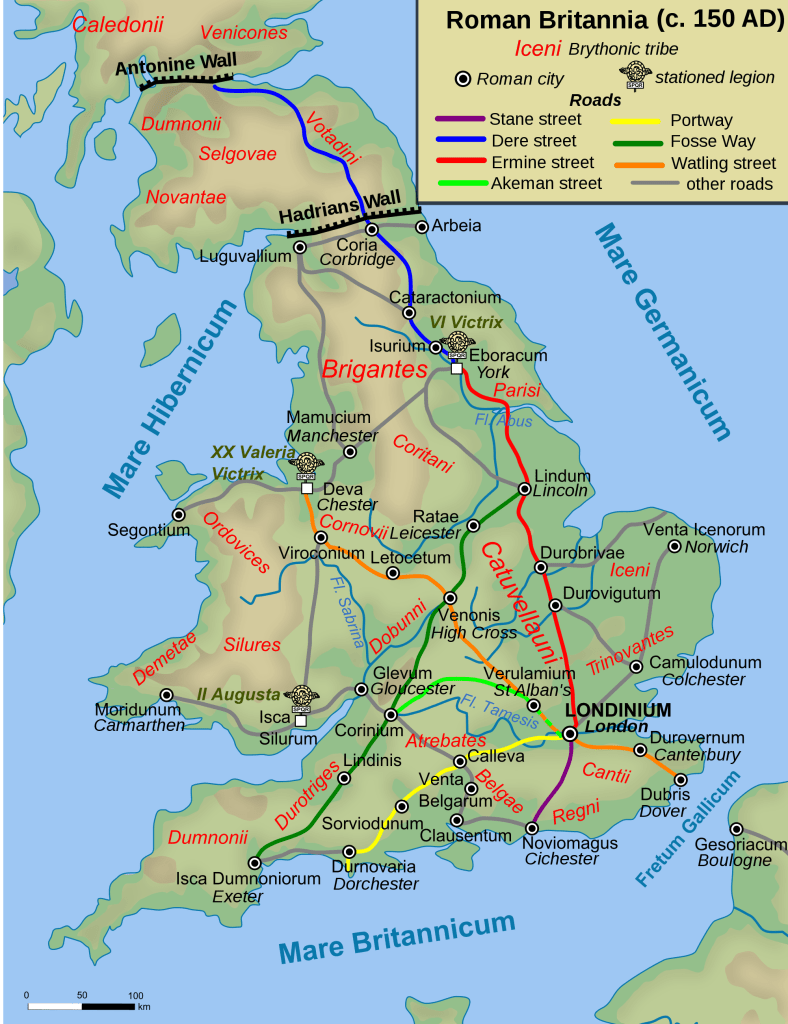
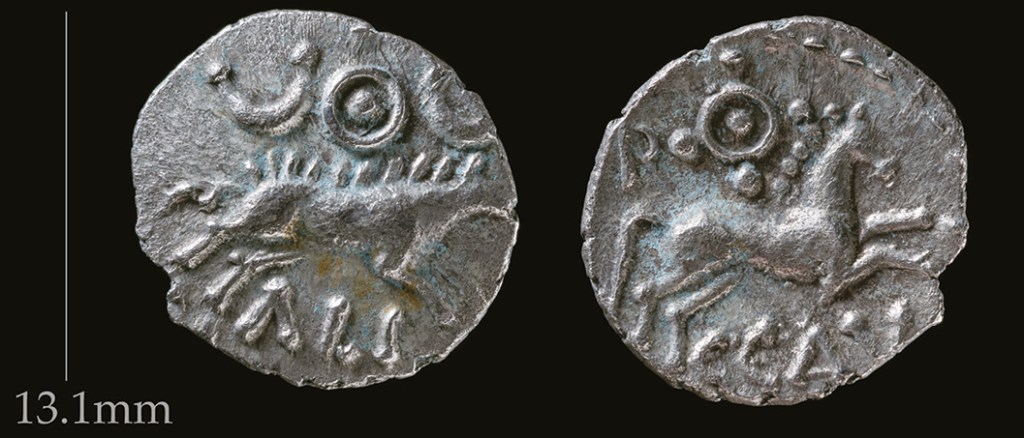
Julius Caesar invaded Britain twice in 55 and 54BC. While he didn’t stay long either time, the Roman conquest of Gaul meant that Rome was now on the doorstep of the tribes of southern Britain. There was evidently a great deal of cross-channel trade and diplomacy, and changes to the British way of life. British kings, including the Iceni, started minting coins.
For almost a century, Rome was distracted from Britain first by a long series of civil wars, then by wars in what are now Germany, the Balkans, Africa and the Middle East. Around 40AD, the emperor Gaius (also known as Caligula) planned an invasion of Britain but ended up marching his legions to the sea to beat the waves with their javelins and gather seashells as booty. Exactly the kind of thing that contributes to his reputation for being insane, though it’s also possible the whole thing was an elaborate practical joke.
In 43AD, Gaius’s successor and uncle Claudius sent an army to invade in earnest, under the pretext of restoring a king named Verica to the Atrebates tribe, who lived in what is now Hampshire. Clearly individual British kings were happy for Rome to use its might when it suited them!
Many tribes in southern Britain fought against Rome, led by Caratacus of the Catuvellauni (who had arguably instigated the whole thing by dispossessing Verica).
No-one really knows whether the Iceni took part in this war, or whether they were happy for the over-powerful Catuvellauni to be taught a lesson. With the war won, Claudius accepted the tribute of ‘eleven Kings’ at Camulodunum (Colchester). One assumes that the Iceni were among them, not least because they were next door and also because it’s difficult to make a list of eleven southern British tribes without them.
The Iceni evidently became a ‘client kingdom’, subject to Roman influence but self-governing. This was the Romans’ usual method in frontier provinces – showering friendly chiefs with money and honours in return for peace, while those who fought were slaughtered and their people enslaved. By doing so Rome prevented its armies being overstretched and created manageable bite-size chunks which could be integrated later. Other empires like Spain in the Americas and Britain in India adopted a similar approach.
In 47, the Iceni rebelled a first time, objecting to an order to give up their weapons of war. This rebellion did not last long. The Romans settled the matter with one victory at a ‘fortified place’ (often identified as Stonea Camp in Cambridgeshire), and almost certainly the Iceni followed the new rules on their defeat.
Prasutagos
This brings us to Prasutagos, King of the Iceni. Tacitus tells us that he died in 60 or 61, after a ‘long and prosperous reign’. Was he already King in 43? Did he become King that year as part of a peace deal with the Romans? Or perhaps in 47, after the first Iceni revolt? Was Boudica his first wife?
Prasutagos was either part of a pro-Roman faction, or recognised the importance of keeping the Romans happy. Very likely he walked a fine line between maintaining good relations with the Romans and keeping the support of his own people.
Almost certainly, Prasutagos would have been given gifts and honours by the Romans, part of the Romans’ approach of spreading their language and superior culture to overawe and entice the local elites. He and his family would have become Roman citizens, even if they didn’t really know what this meant. Around this time, King Cogidubnus of the Atrebates built himself a Roman-style palace. There is no sign Prasutagos ever did likewise, though the idea must have crossed his mind.
Boudica
She’s called ‘Queen Boudica’, but we’re not terribly sure about either. ‘Boudica’ means ‘Victory’ in the British language of the time. To some historians, it seems overly convenient that the woman who came close to beating the Romans is called ‘Victory’. Perhaps this was an epithet, or a name assumed at the time of the rebellion? It’s a sensible point, though Victoria is a common name in modern England, so I don’t think we should assume it wasn’t a common name among the Iceni.
Whether Boudica was really a ‘Queen’ is also debatable. Tacitus describes her husband, Prasutagos, as a King in common with the other leaders of the British tribes. When the Romans invaded Britain in 43AD, eleven kings surrendered to them, probably including the Iceni.
To modern ears ‘King’ and ‘Queen’ brings images of crowns, coronations, oaths of fealty and other trappings from medieval and modern Europe. How this worked among the ancient Britons is very unclear. Did the Iceni have a method for selecting a legitimate King (or Queen)? Or did the Romans use the term loosely for whichever man (or sometimes woman) could command the biggest following in a tribe? If there was an equivalent to a ‘coronation’, did the Iceni have time to go about it?
Some historians also question whether Boudica was really the leader of the rebellion, or simply a convenient figurehead. The Roman sources are quite categoric on the subject:
“The person who was chiefly instrumental in rousing the natives and persuading them to fight the Romans, the person who was thought worthy to be their leader and who directed the conduct of the entire war, was Buduica, a Briton woman of the royal family and possessed of greater intelligence than often belongs to women” says Dio.
Perhaps both Tacitus and Dio played up Boudica’s role to increase the impact of Rome’s disastrous humiliation to their readers. This point of view was relatively popular in the mid-20th Century, but I see no reason why this should be the case. We know at least one other British Queen from this period, Cartimandua of the Brigantes. Clearly the Britons could cope with the idea of a woman leader. Suggesting Boudica was a figurehead strikes me more as twentieth-century sexism more than real history.
“In stature she was very tall, in appearance most terrifying, in the glance of her eye most fierce, and her voice was harsh; a great mass of the tawniest hair fell to her hips; around her neck was a large golden necklace; and she wore a tunic of divers colours over which a thick mantle was fastened with a brooch.” -Dio
From this we get the image of a red-haired woman with commanding presence. Dio wrote some centuries later and no Roman historian ever met Boudica, so perhaps this has grown in the telling, though there is no reason to doubt the fundamentals. (Though does ‘tawny’ really mean brilliant gingery-red?).
Tacitus tells us that the Iceni rebellion was began when, on the death of Prasutagos, Decianus ordered Boudica to be flogged and her two daughters to be raped.
This allows us to work out Boudica’s age, assuming of course that the daughters were hers and not those of a previous wife. The daughters have no husbands. In a society where young noblewomen were a political and dynastic commodity, one would surely expect them to be married by their late teens. So the elder daughter was probably no older than 17. Romans regarded girls as marriageable at 12 and even the Romans regarded sex with prepubescent children as taboo. So the daughters were likely aged 12-17.
Assuming Boudica married in her late teens, we can work out that she was probably in her early thirties. Given that she was chosen, or became, the Iceni war-leader she clearly had political strength. Dio tells us she was ‘of the royal family’. In a sense that is obvious, because as Tacitus tells us she was married to the King; but was she also of royal descent? Did she have her own ‘claim to the throne’, whatever that meant? Or was she simply a charismatic and influential royal wife?
Writers of historical fiction have to create answers to these questions. To me, it makes most sense that Boudica was related to some powerful clans in the Iceni, making her a plausible Queen in her own right.
The spark of rebellion
The Romans often absorbed nearby ‘client kingdoms’ like the Iceni, usually without incident. The Iceni are exceptional because they rebelled and almost succeeded.
We know from Tacitus that on his death, Prasutagos left a will saying that his realm would be ruled jointly by his daughters and Caesar. Tacitus viewed this as an attempt at a diplomatic ploy; client kings’ treaties with Rome were personal, and they usually found their realms subsumed into the Roman Empire when they died. Very likely the whole idea of leaving a will was a Roman idea which Prasutagos adopted pragmatically. (As ancient British doesn’t seem to have been a written language, the idea of a written will can’t have been a British one).
No doubt the Iceni were bewildered that their pro-Roman policy and this deathbed concession was rewarded by a Roman insistence that no, the whole Iceni kingdom was now Roman. Their objections were met with the brutal treatment of Prasutagos’ wife and daughters. As we all know, Boudica was flogged and her daughters raped.
This was not part of the Roman script for seizing a client kingdom. Usually Romans kept the local elite in place, teaching them Latin, identifying the local gods with the Roman gods. The local nobles got the benefit of peace and wealth from trade, in return for paying their taxes to Rome.
The whole thing was very irregular and deeply illegal. Boudica and her family were almost certainly Roman citizens, citizenship being one of the gifts heaped upon friendly client kings. Under Roman law they were immune from corporal punishment and the daughters’ virginity would have been regarded as almost sacred. Instead all of them were treated as if they were no more than slaves, who could be flogged and used for sex at their masters’ will. The rape of the girls was an act of defilement, not simply brutality, a further denial of their legitimacy and contradiction of anyone who said they were the lawful Queens.
Either the Iceni were unusually defiant, or this provincial acquisition was unusually callous and greedy (or perhaps both). The Roman historians are keen to allocate blame, to Catus Decianus the Procurator (a sort of deputy governor responsible for finance and administration) and to moneylenders like the Emperor’s former tutor, Seneca.
Whoever was responsible, this was exactly the kind of brutality and incompetence that turned the Iceni from peaceful Roman allies to the leaders of a bloody rebellion.
 C J Keating Writer